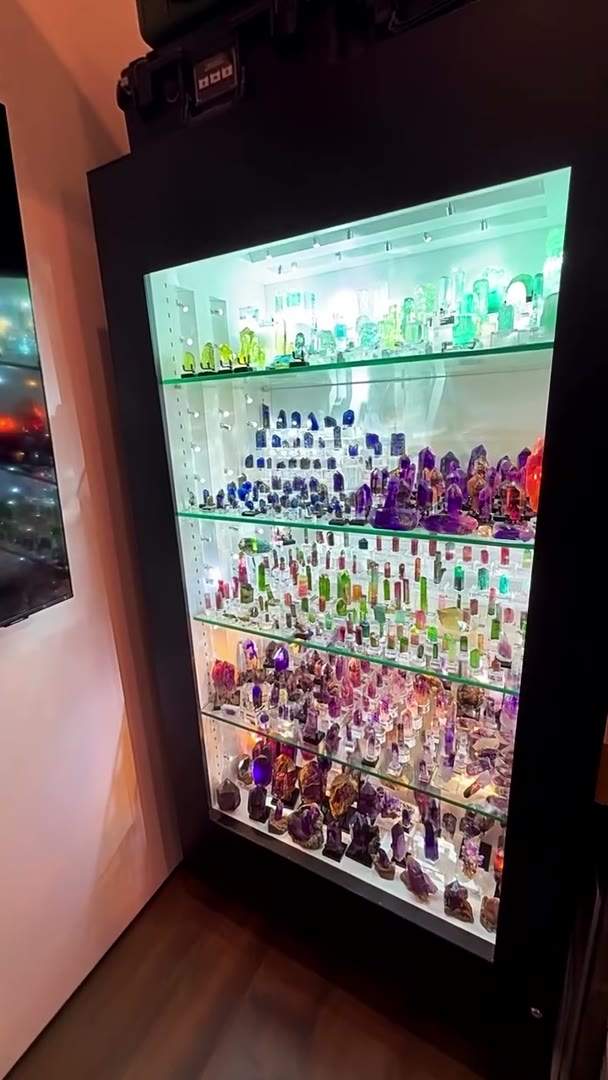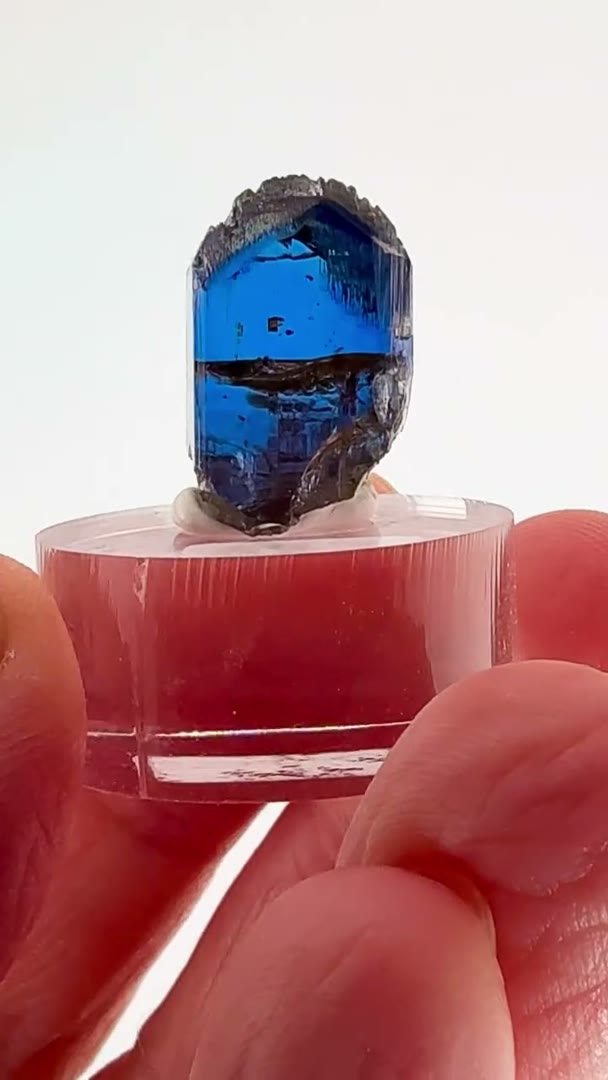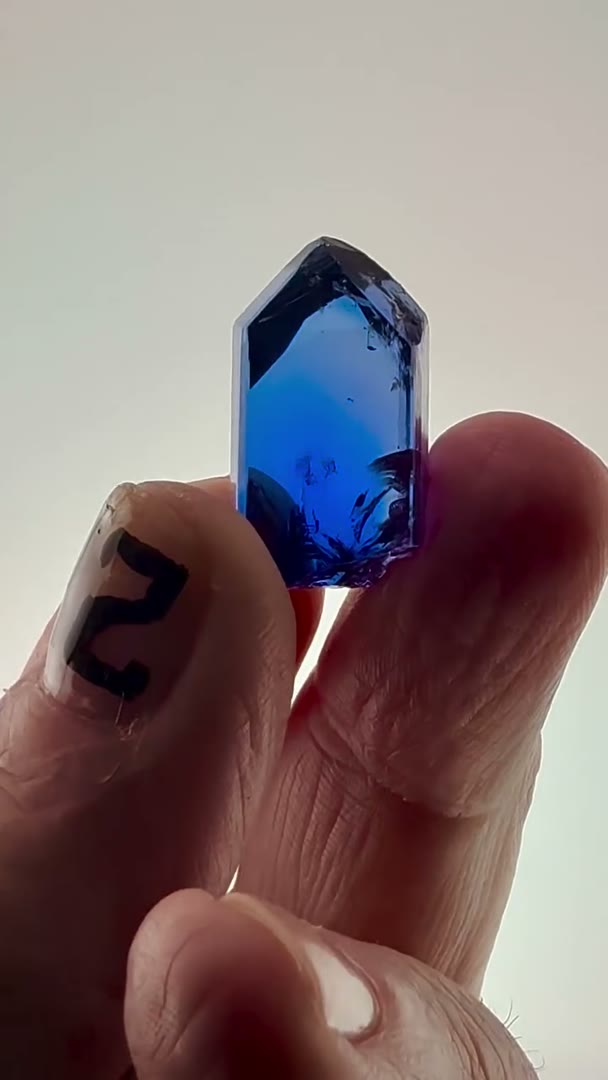
Tourmalines w that dope PLEO
Tanzanite- Species
- Zoisite
- Locality
- Paprok
Tourmalines w that dope PLEO Pleochroism is an optical phenomenon where a substance, especially a mineral or gemstone, appears to have different colors when viewed from different angles, especially when using polarized light. This occurs because the crystal structure absorbs light differently depending on the direction of the light’s vibration as it passes through the crystal. Here’s a more detailed explanation: How it Works: Pleochroism is a result of selective absorption of light within a crystal structure. Different wavelengths of light are absorbed to varying degrees depending on the direction the light travels through the crystal. Types of Pleochroism: Dichroism: Minerals that exhibit two distinct colors when viewed from different directions are called dichroic. Trichroism: Minerals that exhibit three distinct colors are called trichroic. Examples: Gemstones like andalusite, cordierite, emerald, and tanzanite are known for their strong pleochroism. Some minerals that display pleochroism include biotite, fluorite, and amphiboles. Observing Pleochroism: Pleochroism is often observed using a microscope with plane-polarized light. As the crystal is rotated, the colors can change, indicating the pleochroic nature of the mineral. Distinguishing from other phenomena: Pleochroism is different from color change, which refers to a change in color under different lighting conditions, and color zoning, which refers to color variations within a single crystal.
Interested in this piece?
Reach out via Instagram or email for pricing and availability.
Link to this piece copied
- Open the DM with the button below.
- Paste it as your first message — hold the message box and tap Paste (on a computer: ⌘V / Ctrl+V).
- Send it. Jon replies with the price and details.
Lost it? Tap the line above to copy it again.
Prefer email? Ask about this piece →